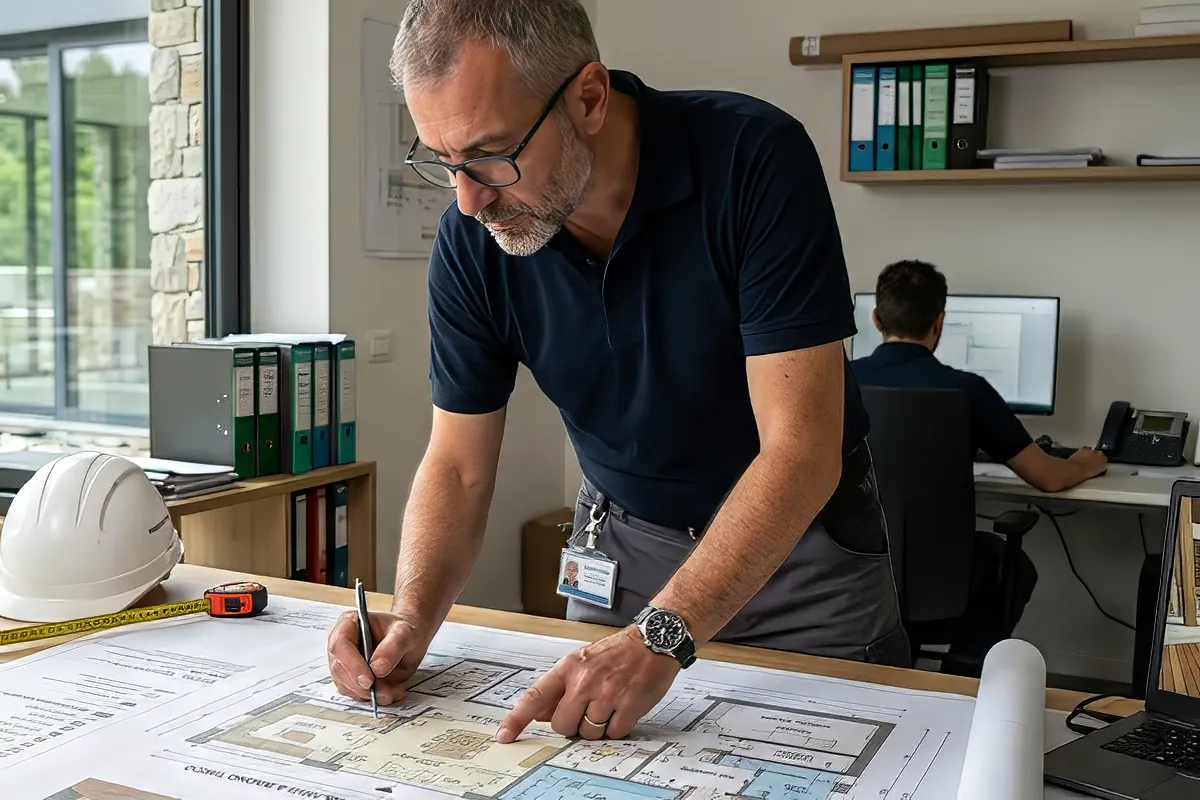
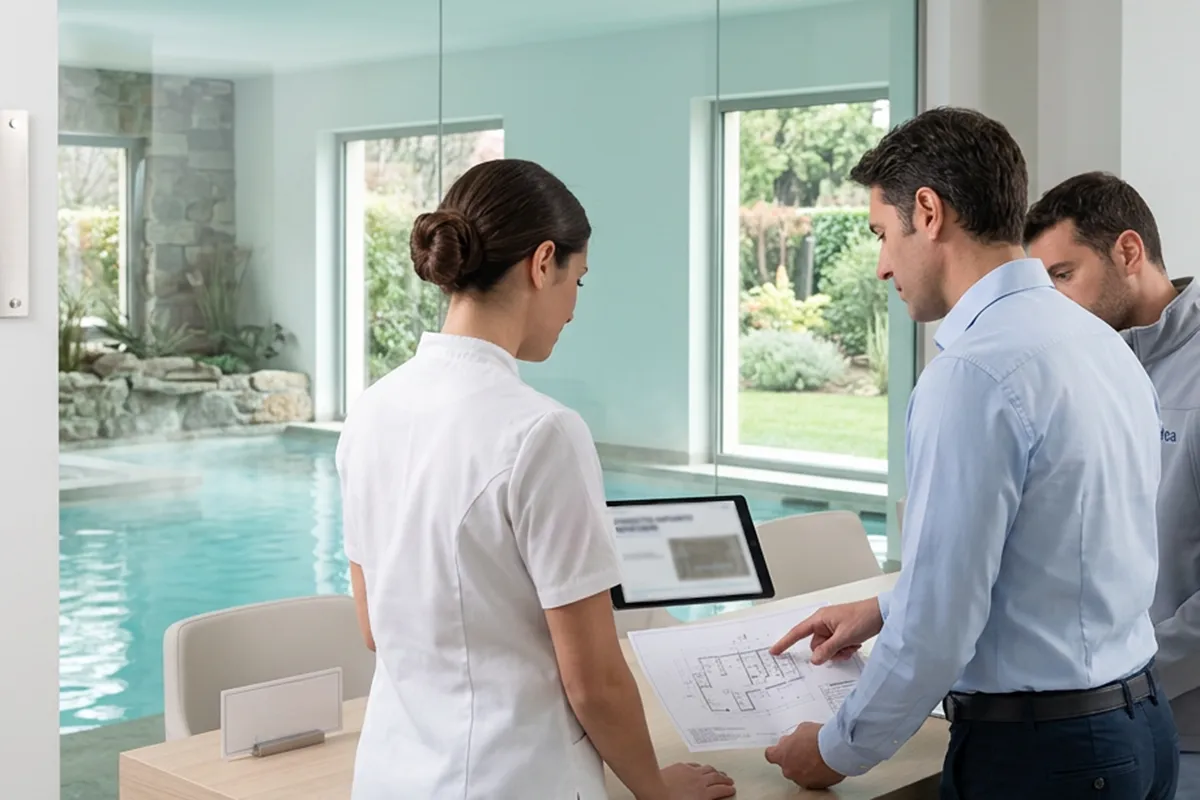
Logistical and system solutions are developed according to the customer's specific needs and the available medical spaces,
with the aim of installing a defined number of treatment stations and the corresponding types of therapy
to deliver the therapeutic action required by the thermal spa specialist.
The modular structure simplifies installation, inspection and maintenance while reducing
system and building-work costs.
- type of therapy;
- combination of two or three different therapies at each treatment station;
- construction of a treatment-station module on one side (positioned against a wall) or on two sides (positioned in the center of the room);
- number of modules making up the complete system;
- therapy management system (manual or automatic);
- different levels of computerization: from manual operation to fully automated management
interfaced with the thermal spa facility's management systems.
- option to rinse with drinking water and/or automatically sanitize the thermal-water distribution circuit,
from the inlet shut-off valve to the point of use.
These criteria make it possible to create CE-certified thermal inhalation departments whose versatility meets
the needs of thermal spa operators and, consequently, their customers.
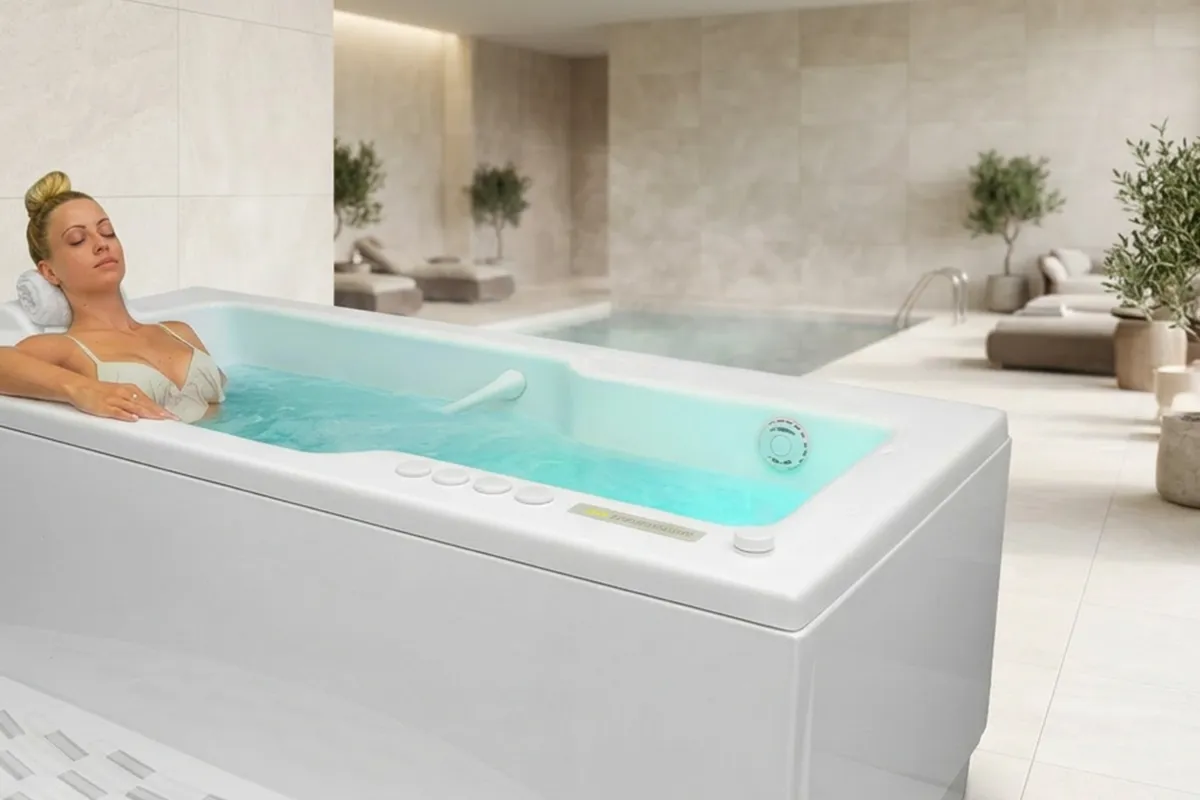
For balneotherapy, Hidrea has likewise developed a suitable solution
that makes this type of thermal therapy accessible to everyone.
Our balneotherapy tubs are also medical devices and have been designed to provide thermal-water baths in complete safety
and comfort, while ensuring full accessibility for people with disabilities and reduced mobility.
The tubs are highly customizable according to the needs of the customer and patient.
The main configuration options include:
- Type of treatment: choice of a simple bath, aerated bath or hydromassage (which can also be combined),
with optional ozone therapy or chromotherapy.
- Ergonomics and installation: controls can be positioned on the right or left to suit the available space.
- Functional accessories: option to add a thermostatic mixer (for precise temperature control) and
a hand shower for rinsing the patient and cleaning the tub.